Key Insights
- The Domain functions as North Austin's second downtown, blending walkable retail, offices, and residential towers in the 78758 and 78759 ZIP codes.
- Housing options range from on-site luxury condos and apartments to established single-family neighborhoods like Gracywoods, Milwood, and Wells Branch just minutes away.
- The Red Line commuter rail connects the Domain area to downtown Austin, giving car-light professionals a transit alternative during peak traffic hours.
- Endeavor, the developer behind the Domain, is planning the next phase of the roughly 6,400-acre Robinson Ranch, signaling continued North Austin growth.
- Downtown Austin office space recently traded around $733 per square foot, reflecting the price premium of the urban core versus the Domain district.
- Buyers and renters near the Domain typically find more space and parking for the dollar than comparable downtown condos.
Living near the Domain means you get a genuinely walkable, mixed-use district in North Austin without the price tag or density of the downtown core. The Domain combines national retailers, chef-driven restaurants, corporate offices, and thousands of residences into what locals now call Austin's second downtown, anchored in the 78758 and 78759 ZIP codes. For tech relocators and young professionals, it offers a rare Texas combination: a car-optional lifestyle, employer proximity, and Red Line rail access.
Downtown Austin gets most of the media attention, from high-rise condos to Lady Bird Lake views. The North Burnet and Domain area, by contrast, is often overlooked even though it has quietly become one of the metro's most active live-work-play zones.
This guide breaks down what the Domain actually is, where you can live in and around it, how the commute and transit options work, and how costs compare with the downtown core. The goal is to help you decide, calmly and with real information, whether this part of North Austin fits your life and budget.
What Is the Domain, and Why Is It Called Austin's Second Downtown?
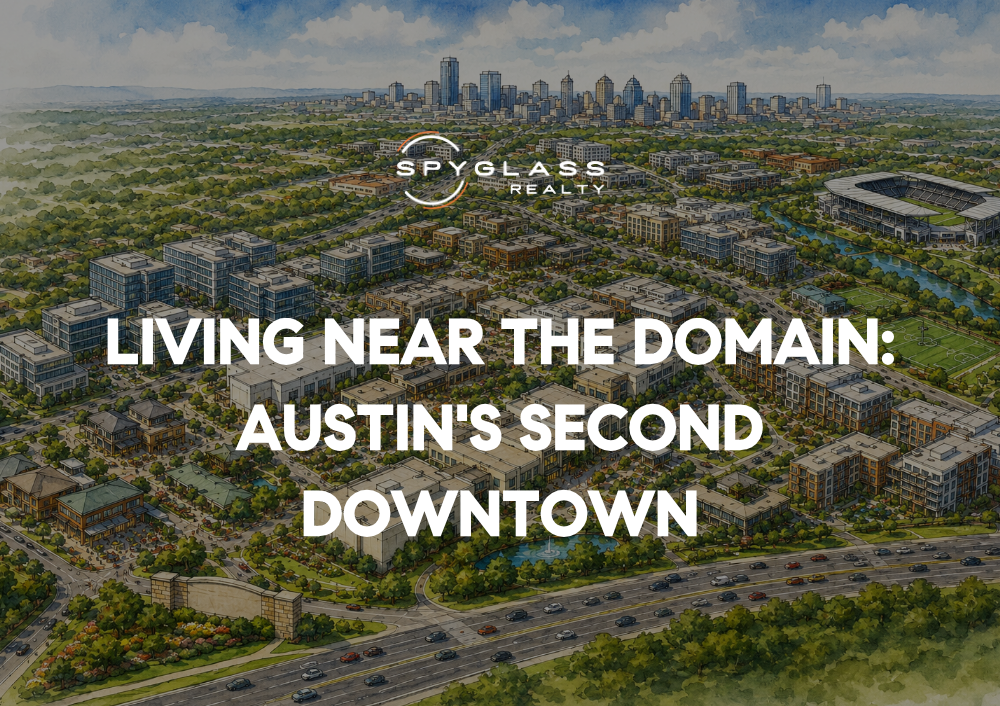
The Domain is a large mixed-use district in North Austin that combines shopping, dining, office towers, hotels, and residential buildings into a single walkable environment. It earns the "second downtown" nickname because it concentrates employment and nightlife the way the urban core does, but on a newer, more planned street grid.
A planned live-work-play district
Unlike downtown, which grew organically over more than a century, the Domain and surrounding North Burnet area were master-planned in phases. That means wider sidewalks, structured parking, and residential buildings placed directly above or beside restaurants and shops. The result is a district where you can live above a coffee shop and walk to your office tower in minutes.
A magnet for tech employers
The area around the Domain has attracted major technology and corporate campuses, which is a big reason relocators gravitate here. That employer density feeds the demand for nearby housing and keeps the restaurant and retail scene busy on weeknights, not just weekends.
Still growing north
The momentum is not slowing. Endeavor, the developer behind the Domain, is preparing the next phase of the roughly 6,400-acre Robinson Ranch property, as reported by the Austin Business Journal. For buyers and investors, continued North Austin development can support long-term demand for housing near the Domain corridor.
Where Can You Live When Living Near The Domain?
Living near the Domain gives you two broad choices: on-site condos and apartments inside the district itself, or established single-family neighborhoods a short drive away. On-site living maximizes walkability, while the surrounding neighborhoods offer more yard, garage, and square footage for the money.
On-site condos and apartments
Inside the Domain, you will find mid-rise and high-rise condos and rental apartments placed directly above retail. These homes suit renters and buyers who prioritize walking to work, dinner, and the gym over having a private yard. Expect amenity-rich buildings with pools, fitness centers, and structured parking, along with condo fees that reflect those services.
Established neighborhoods nearby
Just outside the district sit mature neighborhoods that predate the Domain by decades. Gracywoods, Milwood, and Wells Branch offer single-family homes with mature trees, larger lots, and easy access to the same employers and restaurants. These pockets are popular with buyers who want Domain proximity but need three or four bedrooms and a two-car garage.
If your budget or space needs push you a little farther out, nearby suburbs like Pflugerville, Round Rock, and Cedar Park keep you within a reasonable commute of the Domain while stretching your dollar further on square footage.
Rent or buy first?
New relocators often rent an apartment inside the Domain for a year to learn the area before buying. That approach lets you test the commute and the neighborhood feel with low commitment. If you decide to buy and eventually need more room, our guide to upsizing your home in Austin walks through how to plan that next move.
How Does the Commute and Transit Work From the Domain?
The Domain area is one of the few Austin districts with real rail transit, thanks to a Red Line commuter station that connects North Austin to downtown. That makes a car-light lifestyle far more realistic here than in most of the metro.
Red Line commuter rail
The Red Line links stations in North Austin with the downtown corridor, so you can reach the urban core without fighting for a parking space. For young professionals who work downtown but prefer North Austin housing, the train can turn a stressful drive into productive or relaxing time. Rail service is one of the strongest arguments for living near the Domain rather than in a car-dependent suburb.
Highways and driving
For drivers, the district sits near major North Austin arteries, giving you access to job centers, the airport, and the suburbs. Peak-hour traffic on Austin freeways can be heavy, so many residents time errands and social plans to avoid the worst of it. Keeping a car near the Domain is easy, but many residents find they use it less than they expected.
Walking and biking within the district
The biggest daily convenience is intra-district walkability. Groceries, gyms, restaurants, and offices sit within a few blocks of most residential buildings. If you want to understand how location data shapes value across neighborhoods like this, our overview of how big data is used in real estate shows the metrics agents watch.
Domain vs Downtown: How Do the Costs Compare?
In general, living near the Domain costs less per square foot than living in the downtown core, while offering similar walkability and dining. The downtown premium shows up clearly in commercial real estate, which tends to move ahead of residential pricing.
The downtown price premium
Downtown Austin commands top-tier pricing across property types. A recent downtown office high-rise sale closed at roughly $733 per square foot, according to reporting on the 405 Colorado transaction. That kind of urban-core valuation is one reason residential condos downtown also carry a premium, and why the Domain can feel like better value.
More space for the money in North Austin
Because the Domain and its surrounding neighborhoods sit outside the downtown grid, you typically get more square footage, easier parking, and lower condo fees for a comparable price. Buyers who want a single-family home with a yard have realistic options in Gracywoods, Milwood, and Wells Branch that simply do not exist in the downtown core. For a fuller picture of housing, utilities, and daily expenses across the metro, review our Austin cost of living guide.
Renting versus buying
Austin's residential market has maintained one of the nation's largest gaps between the cost to own and the cost to rent, according to recent Austin market reports. That gap means the rent-versus-buy math near the Domain deserves a careful, personalized look. For many young professionals, renting on-site first and buying nearby later is a sensible sequence.
Is Living Near the Domain Good for Young Professionals and Tech Relocators?
Yes, the Domain area is one of the strongest fits in Austin for young professionals and tech relocators because it combines employer proximity, walkable amenities, and transit access in one district. It offers the social energy of downtown with more housing value and easier parking.
Dining and nightlife without leaving the district
The Domain and Central and North Austin more broadly host a deep restaurant scene, including Italian spots that show up on local dining roundups such as this guide to Austin Italian restaurants. That means date nights, team dinners, and weekend brunches are all within walking distance of home.
Access to Austin events and festivals
Living near the Domain still keeps you connected to citywide events. Major celebrations, from Fourth of July fireworks at Auditorium Shores as covered by the Austin American-Statesman to festivals across Central Texas, are a short train ride or drive away. You get the district's convenience without giving up the wider Austin calendar.
Investor appeal
For investors, steady employer demand and ongoing North Austin development support a reliable renter pool near the Domain. Condos and single-family homes in the corridor tend to attract relocating professionals who value location over square footage. If your interests run toward luxury or waterfront assets instead, our look at waterfront homes on Lake LBJ covers a very different Austin-area niche.
Frequently Asked Questions About Living Near the Domain
Is living near the Domain good for young professionals?
Yes. The Domain area pairs walkable dining, offices, and apartments with Red Line rail access, which suits young professionals who want a car-light lifestyle close to North Austin tech employers. Renting on-site first lets you test the commute before committing to a purchase in nearby neighborhoods like Gracywoods or Milwood.
What ZIP codes cover the Domain area in Austin?
The Domain and North Burnet district fall primarily within the 78758 and 78759 ZIP codes in North Austin. These ZIPs also include established neighborhoods such as Wells Branch and Milwood, so you can search a single area and see both on-site condos and single-family homes. Working with a local agent helps you compare listings across both housing types.
Is it cheaper to live near the Domain than downtown Austin?
Generally yes, the Domain area offers more space and easier parking per dollar than the downtown core. The downtown premium is visible in commercial pricing, where a recent office high-rise traded near $733 per square foot. That urban-core pricing pressure is one reason North Austin housing near the Domain can feel like stronger value for relocators.
Can you get around the Domain without a car?
To a large degree, yes. Within the district, groceries, restaurants, gyms, and offices sit within walking distance, and the Red Line commuter rail connects the area to downtown. Many residents keep a car for weekend trips to the Hill Country or suburbs like Round Rock, but rely on walking and transit for daily errands and commuting.
Is the Domain area a good place to invest in Austin real estate?
The Domain corridor draws consistent renter demand from relocating tech professionals, which supports investor interest in both condos and nearby single-family homes. Ongoing North Austin growth, including Endeavor's planned expansion of the 6,400-acre Robinson Ranch, points to continued area development. As always, run the numbers on any specific property with a local agent before buying near the Domain.
Weighing whether to rent an apartment in the Domain or buy nearby? Let's talk through the rent-versus-buy math for your situation.
Talk to a Spyglass AgentLiving near the Domain gives you a walkable, transit-connected slice of North Austin that keeps downtown energy within reach while stretching your housing dollar further. Whether you choose an on-site condo or a single-family home in Gracywoods, Milwood, or Wells Branch, the area rewards buyers and renters who value location and convenience.
With continued development pushing north and steady employer demand, the Domain corridor is likely to stay one of Austin's most active live-work-play districts for years to come. The right move depends on your budget, timeline, and whether you plan to stay one year or ten.
If you want a clear, pressure-free read on your options near the Domain, a local Spyglass agent can walk you through current listings, commute realities, and the rent-versus-buy decision in plain terms.
Disclaimer: This article is for general educational purposes only and is not legal, tax, or financial advice. Every situation is different. Before making decisions about buying or selling a home, consult with your own real estate professional, lender, tax advisor, and other qualified professionals.